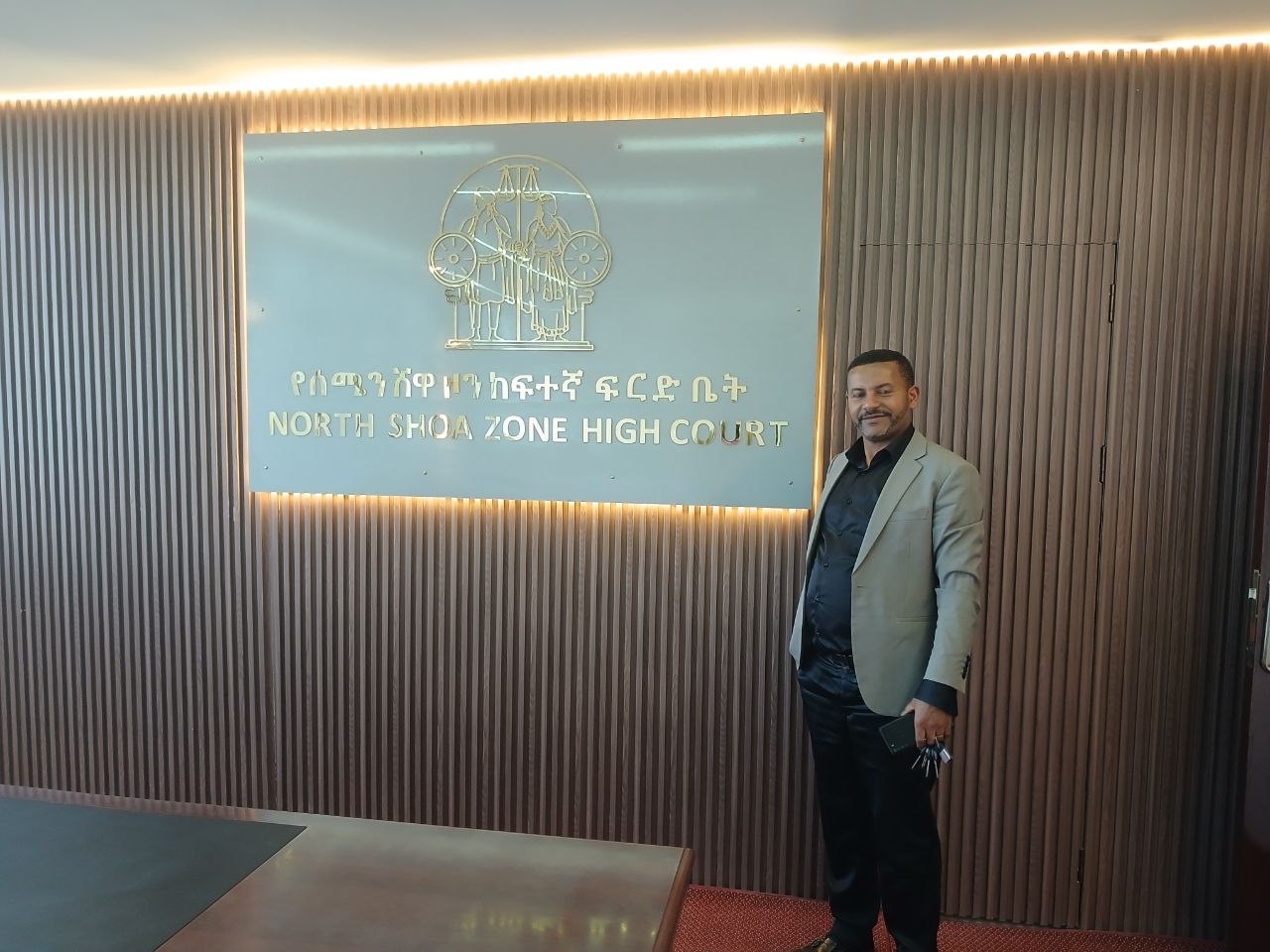
Since the establishment of modern Ethiopia, the judiciary has been recognized as the third branch of government. Although the courts have formally existed since that time, their status as an independent judicial body is a relatively recent development. For many years, the judiciary operated under the Ministry of Justice before gaining its autonomy. The journey towards full independence has been long and remains ongoing. Currently, at the regional level, new regulations are being prepared to allow the judiciary to manage its own administrative staff, separate from the executive branch's civil service system.
This pursuit of independence is driven not only by external demands but also by the deep conviction of judges committed to upholding the autonomy guaranteed by the FDRE constitution. Judges must resist any fear, pressure, or influence—whether from friends, relatives, parties, or authorities—to maintain true independence. Both personal and institutional independence are essential for building a judiciary that the nation can trust. It is the responsibility of all of us to work together to complete this vital process.
Public trust in the judiciary is currently lacking, leading to skepticism about judicial decisions. To improve this, enhancing the consistency and quality of judgments is critical. Training programs based on identified needs will be conducted to strengthen judges’ capabilities, supported by a dedicated research unit. Alongside capacity building, accountability remains a cornerstone of public confidence. Judges must be free to deliver justice without interference but also held accountable for any misconduct. Balancing independence with accountability is crucial for the judiciary to fulfill its mandate. The courts are actively implementing measures to restore and sustain public trust.
The challenges faced by our courts are longstanding and require revisiting the entire judicial process, including procedural laws and court operations. The new criminal procedure and evidence code is approved by house of people representatives, and soon the civil procedure will undergo revision to revitalize civil justice. Simultaneously, efforts are underway to identify and resolve obstacles within the judiciary. Information and communication technology (ICT) will play a key role in this transformation, with plans to digitize judicial processes and implement case management systems to improve service delivery. Accordingly, in north shoa zone high court digital court service delivery is operating. E-filing and E-litigation is commenced. Herein after in north shoa zone high court, litigation thorough physical appearance system is replaced by digital litigation system.
At Woreda level, there is insufficient infrastructure and equipment. Some Woreda courtrooms are outdated or repurposed from other uses, failing to meet modern demands or accommodate the diverse needs of visitors. Accordingly, building modern and standardized worda courts and fulfilling equipment facilities must be a priority to enable courts to fulfill their constitutional responsibilities effectively.
The judiciary depends heavily on skilled and ethical human resources. Laws come to life through knowledgeable and principled individuals who apply them fairly. We must attract and retain not only the most talented but also the most virtuous personnel, especially judges, by providing them with decent working conditions. There is still much progress to be made in this area.
Now a days, the Amhara region Supreme Court give due emphasis for cultural courts. One of the notable cultural dispute resolution mechanisms in north shoa zone is shimglina. As we all know, alternative dispute resolution mechanisms focus on the win-win approach. This dispute resolution mechanism is less expensive and not time consuming. Accordingly, the north shoa zone high court prioritizes area is resolving disputes through alternative dispute resolution mechanisms. Hence it give due attention to strengthen cultural courts on the sphere of the zone.
Achieving a judiciary that is truly independent, impartial, and credible is a gradual process. Past mistakes and accumulated problems cannot be undone overnight. Realizing the people's aspirations requires continuous and collective effort from all stakeholders, matched by the dedication of leadership committed to making these dreams a reality.
Last but not list, we respectfully request all our stakeholders, respected judges, assembly appointees and administrative staff civil servant to support us in the upholding the independence, impartiality, and accountability of the judiciary.
The North Shoa Zone High Court is working hard to improve the services. Work to make our service delivery more technology-enabled will continue.
Justice with integrity!
Yohannes Wondmu
President
With respect and institutional commitment,
Office of the Court President
North Shoa Zone High Court
Official Decree